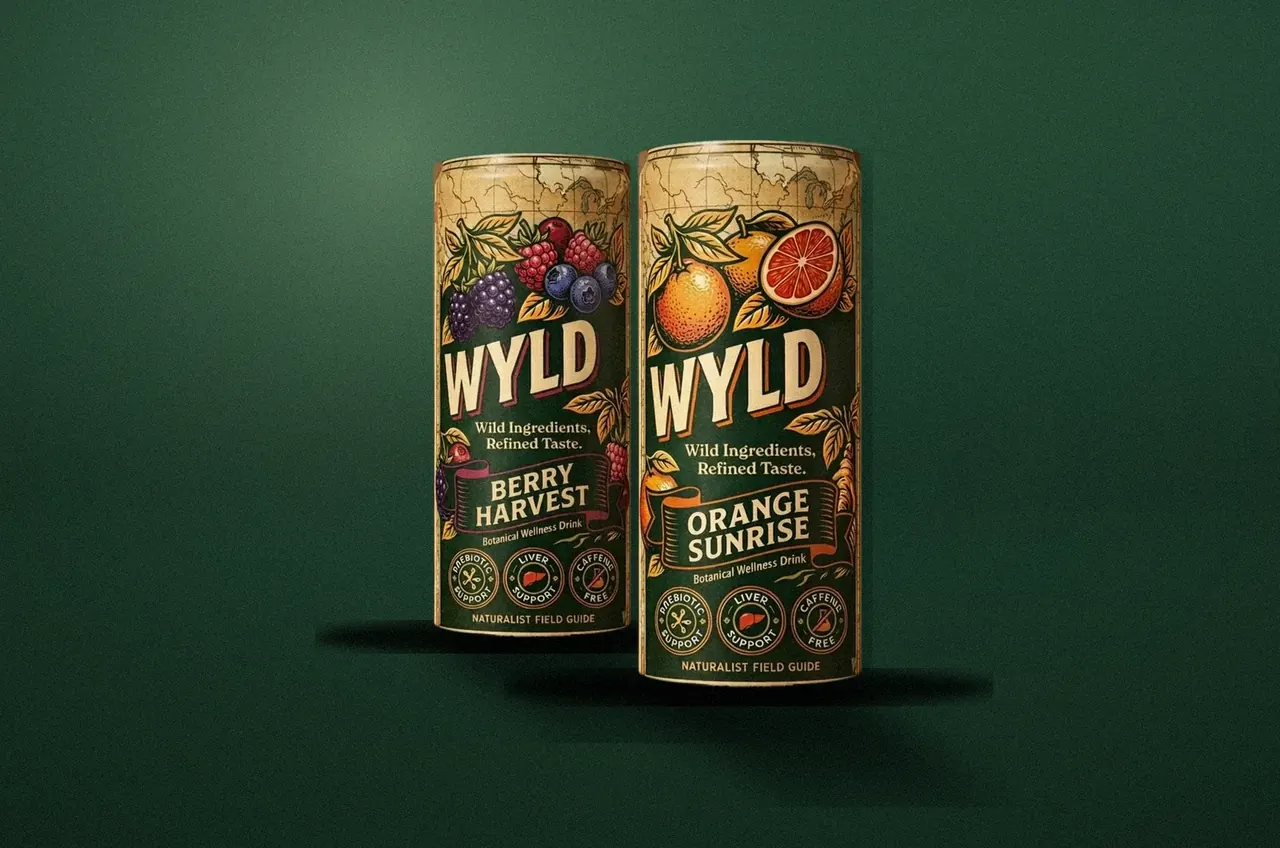
i
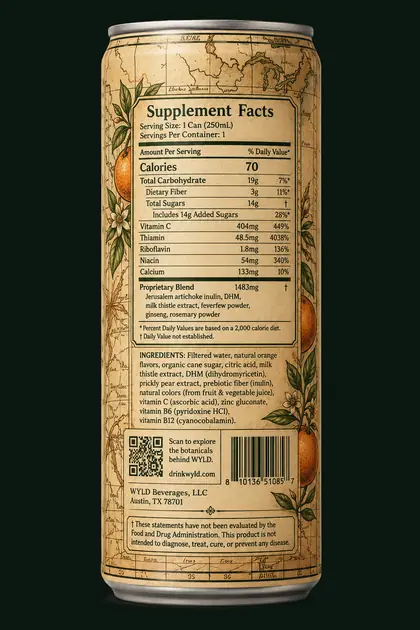
Jerusalem artichoke
Helianthus tuberosus
A North American sunflower grown for its knobby tuber rather than its bloom. The tuber stores its energy as inulin instead of starch, which is what we're after.
- Part used
- Tuber
- In the blend
- Inulin
- Why it's here
- 3 g dietary fiber
ii
Vine tea
Ampelopsis grossedentata
A climbing vine from the mountains of southern China, brewed there as a tea for generations. It is the single source of the DHM in every can — nothing else contributes it.
- Part used
- Leaf
- In the blend
- DHM
- Why it's here
- Signature botanical
iii
Milk thistle
Silybum marianum
A purple-flowered thistle native to the Mediterranean, carried across Europe and into North America. One of the most studied plants in traditional herbalism.
- Part used
- Seed
- In the blend
- Extract
- Why it's here
- Traditional use
iv
Feverfew
Tanacetum parthenium
A small daisy-family flower that has been cultivated in herb gardens since antiquity, valued for the leaf rather than the bloom.
- Part used
- Leaf
- In the blend
- Powder
- Why it's here
- Traditional use
v
Ginseng
Panax spp.
A slow-growing forest root that takes years to reach maturity, long associated in traditional practice with everyday vitality.
- Part used
- Root
- In the blend
- Whole root
- Why it's here
- Adaptogenic tradition
vi
Rosemary
Salvia rosmarinus
An aromatic evergreen shrub from the Mediterranean coast, naturally rich in polyphenols and one of the oldest culinary herbs on record.
- Part used
- Leaf
- In the blend
- Powder
- Why it's here
- Natural polyphenols
These statements have not been evaluated by the Food and Drug
Administration. This product is not intended to diagnose, treat, cure, or prevent any disease.